

Paws for Wellness: A January Reflection
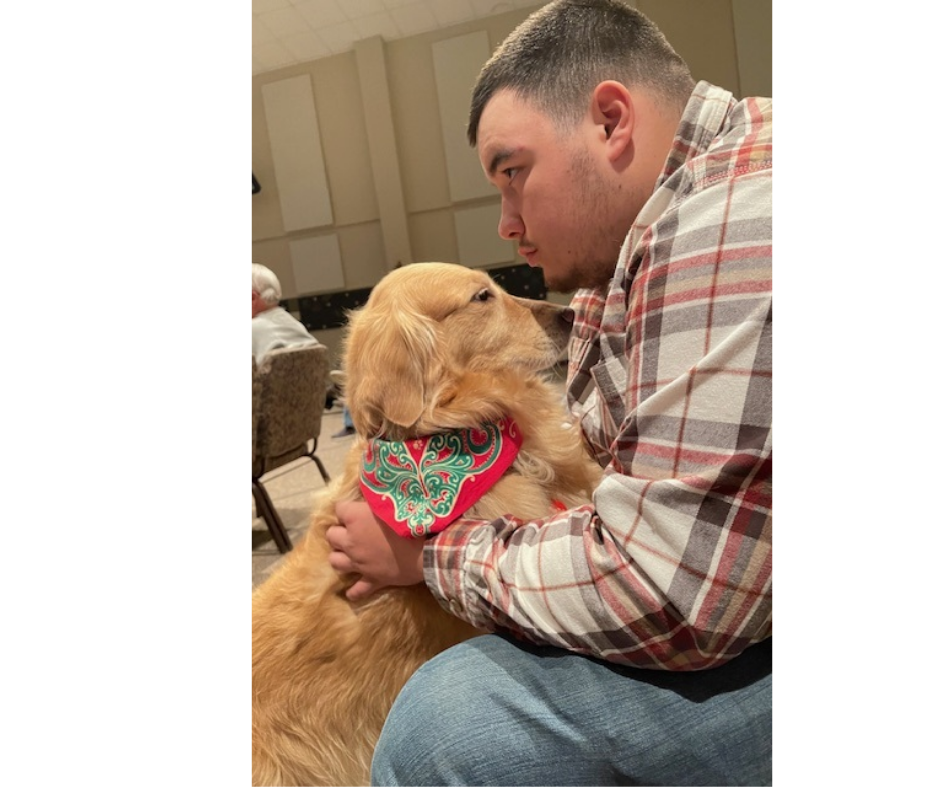
What Is the Therapy?
I get asked this question often when I tell people I’m starting therapy dog visits in Hendricks County:
“What is the therapy?”
Since January is Mental Wellness Month, this question feels especially important. Mental wellness isn’t just the absence of illness—it’s about creating spaces for calm, connection, and healing. Therapy dogs offer a unique kind of support that goes beyond words.
The academic answer is clear. Evidence-based research shows that therapy dogs can lower blood pressure, reduce cortisol, ease feelings of loneliness and depression, mitigate pain, and offer a judgment-free presence—especially for children learning to read. I’m happy to share articles with anyone who wants to dive deeper.
But the real answer? It’s found in the moments. The boots-on-the-ground stories—the ones that stay with you forever—are the proof in the pudding.
Methodist Pet-a-Pet
Years ago, with my first therapy dog, Lilly, we stepped into a pediatric room and gently asked, “Would you like a visit from a therapy dog?” The boy’s mom looked up from the book she was reading, her tired posture softening as hope flickered across her face. Her son—maybe 10 or 11—had just finished chemo. His buzzed haircut and flushed ears told the story before she did.
When Lilly walked in, his whole face lit up. “Come on, girl,” he said, patting the bed. I spread a sheet, and Lilly climbed up beside him. He ran his fingers through her golden-red fur, laughing every time she tried to sneak a lick. “I don’t mind,” he grinned. “I like it.”
When it was time to leave, his mom had tears in her eyes. “Thank you so much. This took his anxiety down a ton of notches.”
That’s the therapy.
Drug, Alcohol, & Mental Health Treatment Center
During the pandemic, Mabel and I visited an all-male rehab center every two weeks. One day, as the men gathered for group, a tall, thin man walked in and sat down with his head in his hands. He had just finished detox. Mabel didn’t hesitate—she pulled me straight to him and gently nudged under his arms until he looked up. “Hey, girl,” was all he could manage. He patted her head and stroked her back. She stayed until he was done.
I have no doubt that if I had left her there, she would have stayed until he felt whole again.
That’s the therapy.
Church
When I served as a children’s minister, I often brought Bella or Mabel along. One little boy, living with his grandparents while his parents faced legal trouble, started begging to come early just to see the dogs. He would run through the room, and Mabel would gently chase him, tail wagging. For a child navigating uncertainty, those moments mattered.
That’s the therapy.
Women’s Shelter
At a women’s shelter, Mabel and I were just about to leave when a staff member asked, “Do you have a little extra time?”
“Of course,” I said.
We followed her down a winding hallway and turned the corner to find a mom and two middle-school kids who had just arrived. Before I could take it all in, Mabel moved with purpose—straight to the center of the group—because she knew her job. She stood quietly, her presence steady and calm.
The mom bent over and began to sob, her tears falling onto Mabel’s golden fur. Mabel didn’t flinch. She stood strong, absorbing every ounce of pain like only a therapy dog can. The kids gave her quick, hesitant pets—still guarded, still processing—but Mabel made sure each one felt seen before circling back to the mom.
Months later, during another visit, a woman approached me. “Do you remember me?” she asked. I didn’t. She smiled softly.
“You and Mabel were here the day my kids and I came to the shelter. I had just left everything I knew. I felt alone and afraid. Mabel made me feel welcomed—like I could take the next step.”
She was radiant. Confident. A completely different woman.
That’s the therapy.
The Heart of It
These stories are just a glimpse of what therapy dogs do. Yes, the research matters—but the real evidence is in the lives touched, the anxiety eased, the hope restored.
Therapy isn’t always about fixing something. Sometimes, it’s about being present—offering comfort without words, judgment, or expectation. That’s what these dogs do. And that’s why this work matters.
Why Share This During Mental Wellness Month?
Because mental wellness is essential for everyone. Therapy dogs can’t solve every problem, but they can open doors to healing—one gentle nudge, one wagging tail, one moment of connection at a time.
If you’re struggling, please know you’re not alone. Reach out for help. Talk to someone you trust. And if you’d like to learn more about therapy dog visits or support this mission, I’d love to connect with you.
Together, we can make Hendricks County a place where hope has paws.
We’re better together,
Sandy
